Apply for RDP House Online in South Africa (2026)
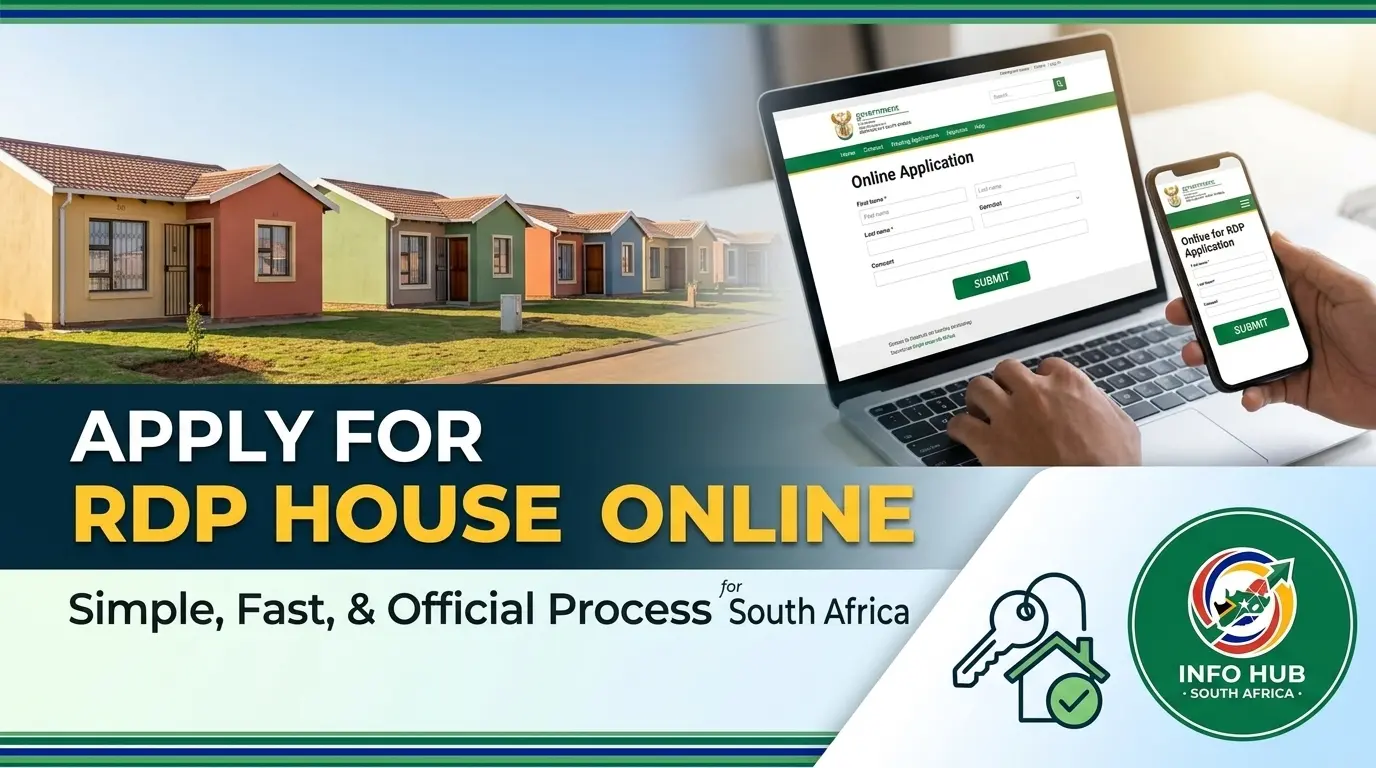
Can you apply for an RDP house online in South Africa? No, the full application process requires in-person registration. Applicants must visit their local municipality or provincial Department of Human Settlements office, where an official records their details in the government’s Housing Subsidy System (HSS). Although you cannot complete the entire application online, you can check your housing application status using your South African ID number.
RDP housing, officially known as Breaking New Ground (BNG) or government-subsidised housing, provides qualifying low-income households with a government-built home at no cost. Unlike FLISP or First Home Finance, which offer financial assistance towards homeownership, RDP housing provides a completed home to eligible beneficiaries. This guide explains the eligibility requirements, how to register for an RDP house, which documents to prepare, and how to check your application status in 2026.
What Is an RDP House in South Africa?
An RDP house is a government-subsidised home intended for low-income South African households that cannot afford to buy a property through a conventional home loan. RDP stands for Reconstruction and Development Programme, a national initiative introduced in 1994 to help address the country’s housing shortage and improve access to affordable homes.
Today, these properties are officially associated with Breaking New Ground (BNG) housing or government-subsidised housing. Although the terminology has evolved, many South Africans still use the familiar term “RDP house” when referring to this housing programme.
Eligible applicants are registered on the government’s housing database and considered for assistance as suitable housing projects become available in their areas. Receiving an RDP house is not simply a matter of applying first. Allocation depends on eligibility, housing needs, the applicable allocation criteria and the availability of completed homes in the relevant municipality.
Do You Still Qualify for an RDP House?
Your circumstances may change while you wait for an RDP house, and these changes could affect your eligibility for a government housing subsidy. Factors such as household income, property ownership and marital status may need to be reviewed when your application is assessed or a home becomes available.
To help you understand your position, Info Hub South Africa recommends using the RDP / BNG Housing Eligibility Checker. This free online tool provides a preliminary assessment based on the details you enter, helping you understand whether you appear to meet the basic qualifying requirements.
Whether you are preparing to register for the first time or have been on the housing waiting list for years, checking your eligibility can help you prepare before visiting your local municipality or provincial Department of Human Settlements office. Remember that the checker provides an initial indication only; the relevant government department makes the official eligibility decision.
Who Is Eligible for an RDP House in South Africa?
Before you register for an RDP house, check whether you meet the government’s basic housing subsidy requirements. Eligibility generally depends on your citizenship or residency status, age, household income, family circumstances and previous property ownership.
Basic RDP Housing Requirements
You will generally need to meet the following conditions:
Certain groups, including older people, persons with disabilities, military veterans, child-headed households and families living in particularly poor housing conditions, may receive priority under applicable allocation policies.
RDP Housing vs FLISP or First Home Finance
Your household income can help you identify which housing assistance programme may be relevant to your circumstances.
| Feature | RDP / BNG Housing | FLISP / First Home Finance |
|---|---|---|
| Main purpose | Provides a government-subsidised home to qualifying households | Helps eligible buyers purchase a home |
| Income bracket | Generally R3,500 or less per month | Historically associated with incomes above the RDP threshold and up to R22,000 per month |
| Type of assistance | Subsidised housing allocation | Financial assistance towards homeownership |
| Property ownership | Previous ownership restrictions apply | Eligibility conditions apply to the applicant and property |
Not sure which housing subsidy applies to you? Read our guide on how to qualify for a housing subsidy to understand the available options before starting your application.
Keep in mind that meeting the basic requirements does not guarantee that you will receive a house. The relevant housing authority must assess your circumstances against the applicable rules, and allocation also depends on the availability of housing.
Can You Apply for an RDP House Online?
No, you cannot complete the entire RDP housing application process online. Although many people search for phrases such as “apply for an RDP house online in Gauteng” or “RDP application online in KZN,” applicants generally need to visit the relevant municipal housing office or government Customer Support Centre to complete the required registration and verification procedures.
Some provincial housing departments and municipalities provide online information, application guidelines, or downloadable forms. However, these resources do not necessarily allow you to submit and complete your application entirely online. You may still need to provide supporting documents and undergo identity, income, and property ownership checks in person.
This process applies to applicants across South Africa, including Gauteng, KwaZulu-Natal, the Western Cape, the Eastern Cape, and Limpopo. Before visiting an office, check with your provincial housing department or municipality for the latest application instructions and required documents.
Although you generally cannot complete a new RDP housing application entirely online, you may be able to check your existing application status online. The next section explains how to check your RDP housing application status and find out whether there have been any updates.
Documents Required to Apply for an RDP House
Before applying for an RDP house in South Africa, make sure you have all the necessary documents ready. Providing the correct paperwork can help prevent delays while your application is being processed.
You may need to prepare the following documents:
Do Your Documents Need to Be Certified?
Check with your provincial housing department or municipal housing office to confirm which documents must be certified. If certified copies are required, you can generally have them certified free of charge at a police station or magistrates’ court in South Africa.
It is best to prepare your documents before visiting the housing office and confirm the latest requirements with the relevant authority. This will help you avoid unnecessary trips and make the RDP housing application process easier.
How to Apply for an RDP House in 2026
Step 1: Visit Your Local Municipality or Human Settlements Office
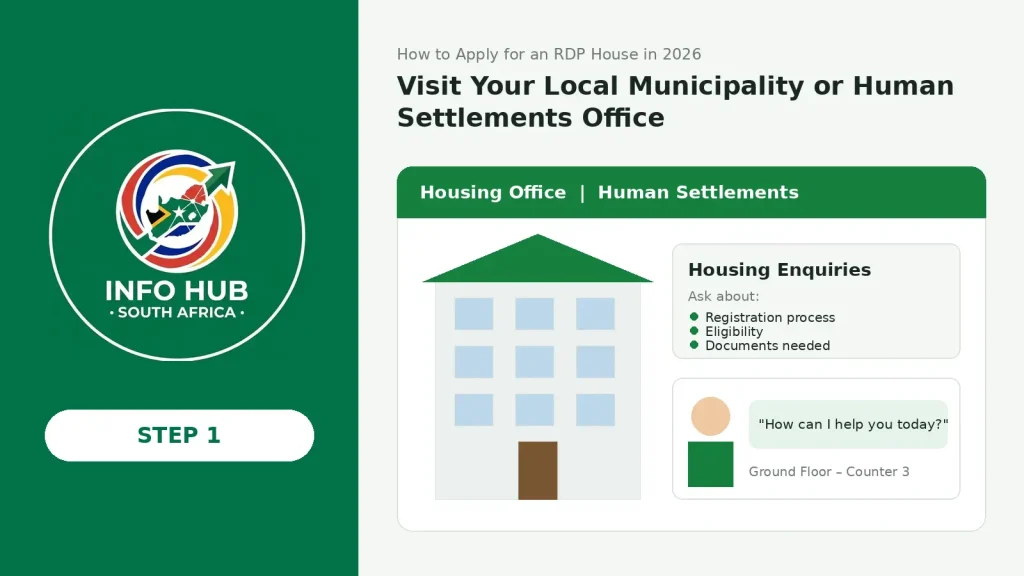
Visit your local municipal housing office or provincial Department of Human Settlements to begin your RDP housing application. Officials can explain the registration process, confirm your eligibility, and tell you which documents you need to submit.
Step 2: Complete the RDP Housing Application Form
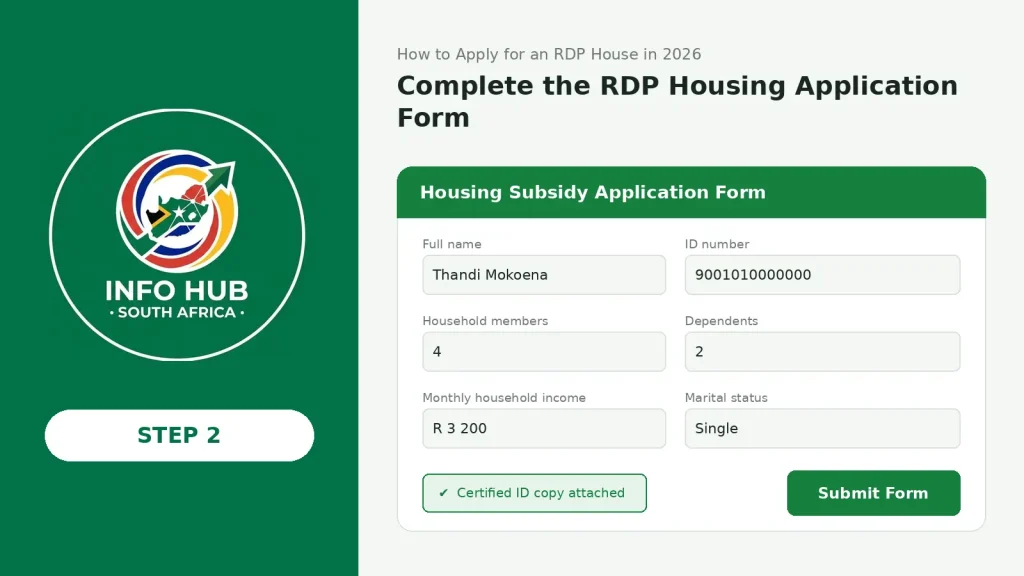
Fill out the housing subsidy application form with accurate information about yourself, your household, income, and dependents. Submit the required supporting documents, including certified copies where requested.
Step 3: Register on the National Housing Needs Register (NHNR)
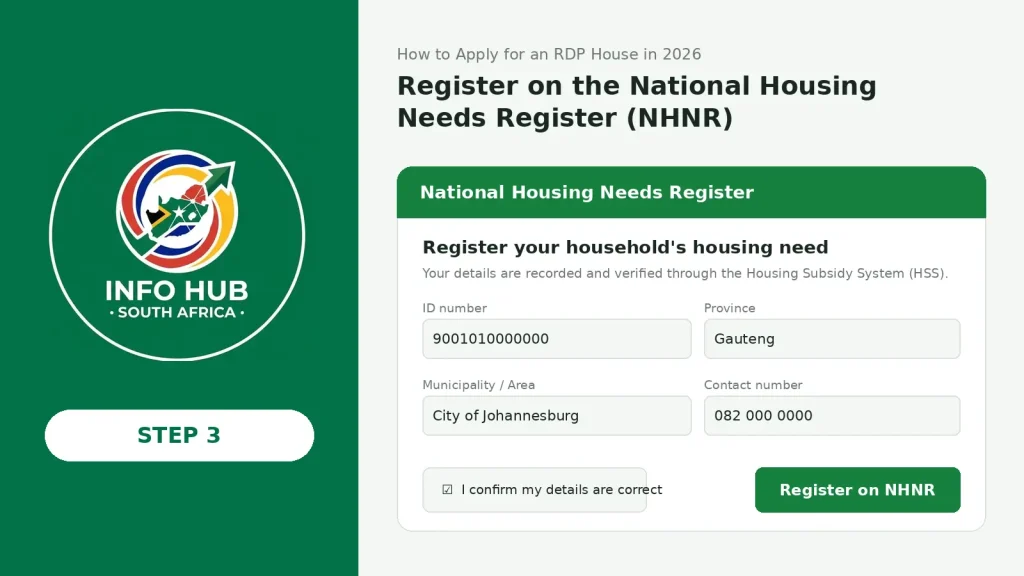
Ask the relevant housing office about registering on the National Housing Needs Register (NHNR). This database records households in need of housing. Your details may also be captured and processed through the Housing Subsidy System (HSS), which supports the verification and administration of housing subsidy applications.
Step 4: Wait for Your Application to Be Verified
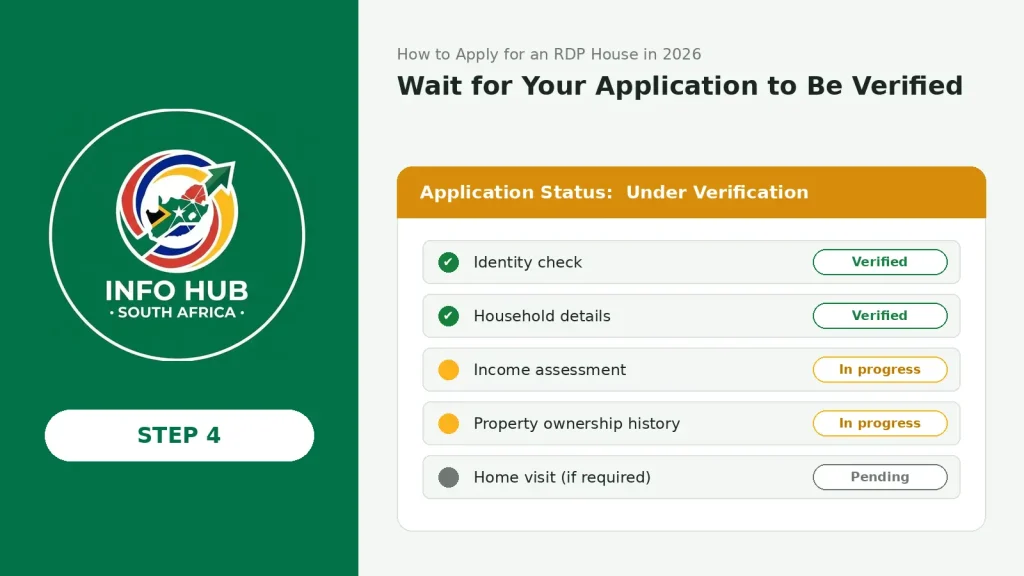
Housing officials will check your identity, household details, income, and property ownership history to determine whether you meet the eligibility requirements. In some cases, officials may conduct a home visit to verify your living conditions or other information provided in your application.
Step 5: Keep Your Housing Registration Reference Number Safe
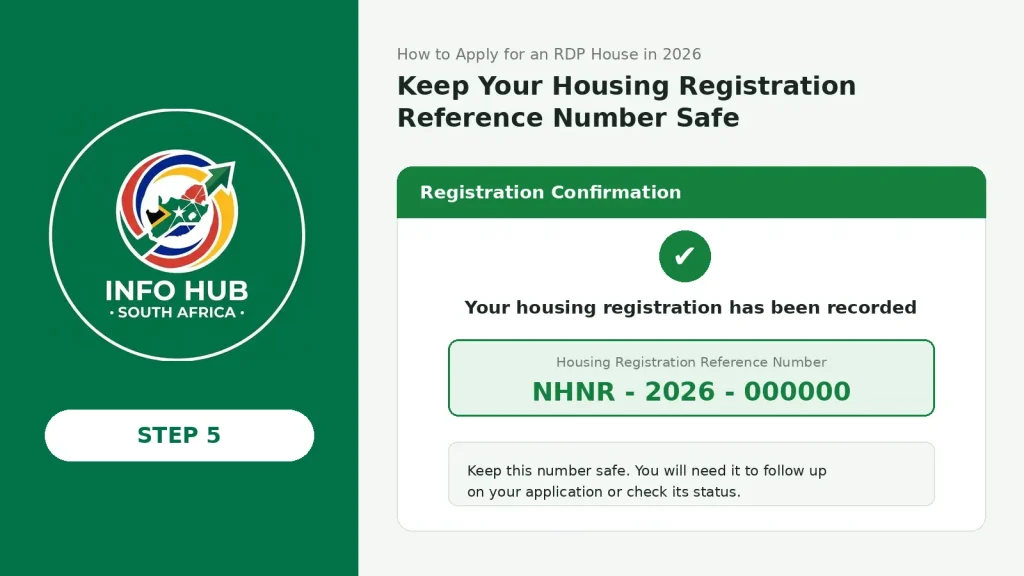
Once your registration has been recorded, ask for confirmation or a reference number if one is issued. Keep this information safe because you may need it when following up on your application or checking its status.
Step 6: Wait for Housing Allocation
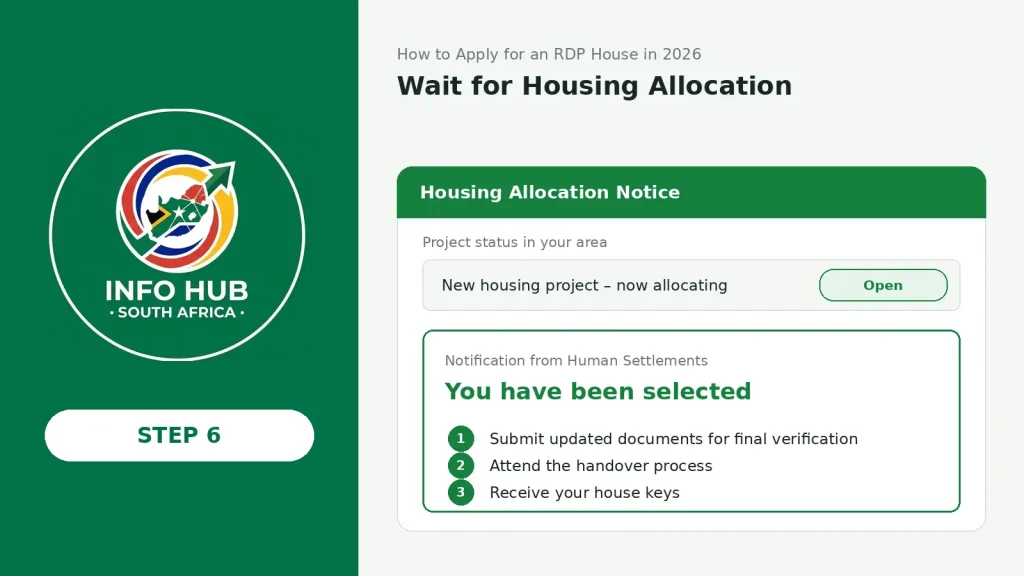
When suitable housing projects become available in your area, eligible applicants may be considered for allocation according to applicable housing policies, project requirements, priority criteria, and verified eligibility. If you are selected, officials will contact you about the next steps, which may include submitting updated documents for final verification before the house is handed over.
How long will you wait for an RDP house? Waiting periods vary by province, municipality, housing project, and the number of applicants. Read our guide on how long it takes to get an RDP house for more information.
How to Check Your RDP Housing Application Status Online
Although you generally cannot complete a new RDP housing application entirely online, you can use online services to check the housing subsidy information recorded against your South African ID number.
To get started, visit the HSS Online Status website and follow the instructions to look up your details using your 13-digit South African ID number. The information displayed depends on the records available in the system.
Keep in mind that an online status check may not show your exact position on a housing waiting list or provide a confirmed date for when you will receive a house.
Other Ways to Check Your RDP Application Status
If you cannot find your information online or need further clarification, you can also:
Make sure your phone number and residential address remain up to date with the relevant housing office. This helps officials contact you if your application progresses or you are selected for housing allocation.
What If Your RDP Housing Application Is Rejected?
If your RDP housing application is rejected, do not assume that you have no further options. Contact your local municipality or provincial Department of Human Settlements to find out why the application was unsuccessful and what steps you can take next.
Common reasons for rejection or ineligibility may include:
Can You Appeal a Rejected RDP Application?
You should first request the reason for the decision and ask the relevant housing office about its review or appeal procedure. If you believe the decision was incorrect, follow the official process and provide any additional supporting documents requested.
If your circumstances change, ask the department whether you can update your existing registration or submit a new application. Eligibility and appeal procedures depend on the circumstances of your case and the applicable housing policies.
Beware of RDP Housing Application Scams
Applying for an RDP house through official government channels is free. You should never pay an individual who promises to secure a house, move your name up the waiting list, or guarantee your allocation.
Fraudsters may use social media, WhatsApp messages, or fake application forms to convince people to pay registration fees or provide personal information. Remember that paying someone does not guarantee that you will receive an RDP house.
To protect yourself:
Always confirm contact numbers and email addresses through official government websites before sharing personal information or reporting a suspected scam.
FAQs
Conclusion
Applying for an RDP house in South Africa requires you to follow the official housing registration process. Although you generally cannot complete the entire application online, you can visit your local municipality or Department of Human Settlements office to register and submit the required documents. You may also be able to check your housing subsidy status online using your South African ID number.
Before applying, prepare your supporting documents, keep your application reference number safe, and ensure your contact details remain up to date. Remember that eligibility requirements, waiting periods, and housing allocation procedures may vary depending on your municipality and the housing project. Always confirm the latest information with the relevant government office, and never pay anyone who promises to guarantee a house or speed up your application.
At Info Hub South Africa, we aim to make important government services and application processes easier to understand. Our website provides helpful guides on topics such as RDP housing applications, Home Affairs services, student portals, and other essential resources for South Africans. Visit Info Hub South Africa for clear, practical information to help you understand requirements, follow application procedures, and stay informed.
Read More
GEHS Login South Africa 2026: Online Login, Password Reset & Status Check Guide
Television Licence South Africa: Online Application, Status Check & SABC TV Licence Guide 2026
Passport Renewal South Africa: Online Application, Fees & Banks