FireFighter Learnership 2026 in South Africa: Requirements, Application Guide & Opportunities
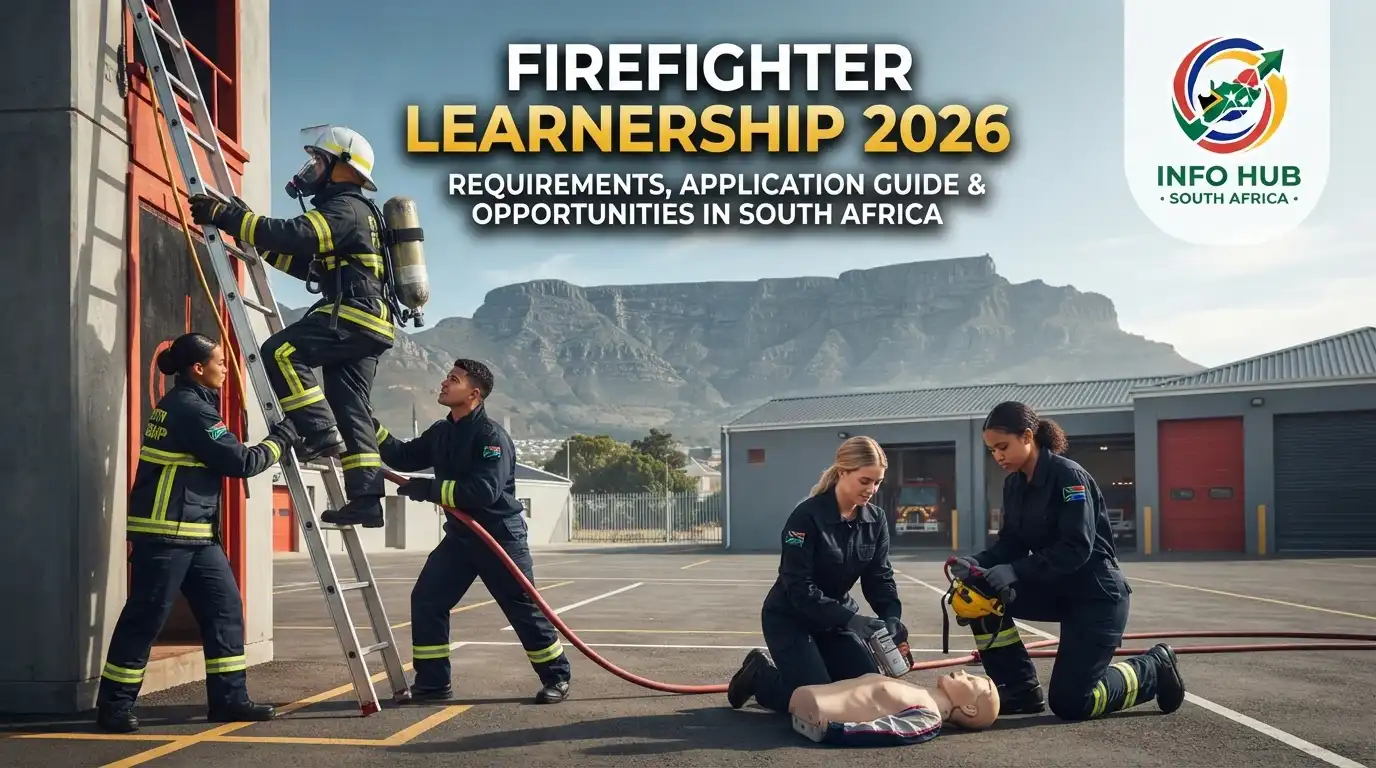
Finding a learnership that combines structured training with practical workplace experience can be an important first step towards a career in emergency response and industrial safety. The Sasol Firefighter Learnership is aimed at developing young South Africans who want to build skills in firefighting, emergency management and workplace safety.
For applicants searching for the firefighter learnership 2026, it is important to distinguish between information published by opportunity-listing websites and information confirmed by Sasol itself. The Edupstairs listing you provided can be used as a reference for the advertised opportunity, while Sasol’s official careers pages should be used to verify recruitment requirements and active vacancies.”Visit Homepage for more”.
What Is the Sasol Firefighter Learnership?
The Sasol Firefighter Learnership is designed around the development of practical competencies needed in emergency management and industrial safety environments. A learner entering this type of programme needs more than academic qualifications; physical readiness, medical fitness, discipline and the ability to respond appropriately during emergencies are also important.
Firefighting work can involve demanding environments where employees must remain calm, follow procedures and work effectively with other emergency personnel. For this reason, candidates should carefully consider the physical and assessment requirements before submitting an application.
Sasol’s wider learnership framework uses workplace-based learning alongside structured education. The company currently lists several technical learnership fields, while its recruitment process provides a defined sequence of shortlisting, interviews, psychometric assessment and verification.
Sasol Firefighter Learnership Requirements
Before applying, prospective candidates should check every requirement carefully. Based on the information supplied for this firefighter opportunity, the key requirements include the following:
| Requirement | What applicants should have |
|---|---|
| Citizenship | South African citizenship |
| Age | Generally 18 to 29 years for the advertised youth opportunity |
| Education | National Senior Certificate (Grade 12/Matric) or equivalent |
| Mathematics | Mathematics, Technical Mathematics or Mathematical Literacy, as specified |
| English | English or Business English |
| Science | Physical Science or Technical Science |
| Driving | Valid Code B driver’s licence or higher |
| Medical fitness | Ability to meet the required firefighter fitness and medical standard |
| Physical readiness | Capacity to complete demanding physical and emergency-response assessments |
| Stress assessment | Ability to cope with assessments involving heights, confined spaces and other challenging conditions |
Grade 12 Subjects Matter
A Matric certificate alone should not be treated as the only academic consideration. Applicants should check the required subjects and passes carefully before submitting their information.
Sasol’s general learner programme requirements specify a completed National Senior Certificate or equivalent with passes in Technical Mathematics/Mathematics, English/Business English and Technical/Physical Science.
This means candidates should have their Matric results available when preparing an application. If your qualification or subject combination is different from the stated requirement, check the specific advert rather than assuming that your application will qualify.
Age and Citizenship Requirements
The advertised firefighter opportunity is intended for unemployed South African youth, with the supplied requirements indicating an age range of 18 to 29 years.
Applicants should also pay attention to any location or community preference stated in the specific advert. The information supplied for this opportunity refers to areas around Sasol’s operational hubs, including Secunda and Sasolburg.
Do not assume that living in Gauteng or another province automatically makes you eligible or ineligible. The correct approach is to read the specific vacancy conditions and confirm them against the official Sasol recruitment information.
Why a Driver’s Licence Can Matter
A valid Code B driver’s licence or higher is included in the supplied requirements for the firefighter opportunity. Applicants should therefore have a clear copy of their current licence ready if the application asks for it.
A driver’s licence should not be treated as a substitute for the other requirements. Candidates still need to meet the academic, medical, physical and assessment conditions attached to the opportunity.
Physical and Medical Fitness
Firefighting is physically demanding, so applicants should expect fitness and medical screening where required.
The supplied opportunity information refers to assessments involving areas such as:
These assessments are intended to establish whether candidates can safely cope with conditions relevant to emergency-response work.
Sasol’s published recruitment information also confirms that shortlisted learner candidates can progress through medical fitness testing, security clearance and qualification verification after the earlier stages of selection.
Important: Meeting the minimum requirements does not guarantee selection. Sasol explicitly states that applicants who meet the minimum requirements may apply, but this does not guarantee an interview or automatic selection.
Documents to Prepare Before Applying
One of the easiest ways to avoid delays is to prepare your documents before opening the application form.
For the advertised firefighter opportunity, applicants should prepare:
Make sure scans are clear and readable. Names, dates and qualification information should match the information entered into the application form.
Sasol also warns that applicants who provide untruthful information or invalid documents may have their applications rejected.
Where Should You Apply?
This is an important point for anyone searching online for a firefighter learnership.
The Edupstairs page supplied for this article can help readers find information about the advertised opportunity:
Sasol Fire Fighter Learnership 2026 listing on Edupstairs
However, applicants should verify the vacancy through Sasol’s official recruitment channels before submitting personal information. Sasol’s own careers FAQ says candidates need to register on the Sasol careers website and apply for the specific position they are interested in.
What Happens After You Apply?
Submitting the application is only the beginning of the recruitment process. Sasol’s published learner programme process provides a useful indication of what shortlisted candidates can expect.
The general sequence is:
Application → Shortlisting → Interview → Psychometric Assessment → Medical/Security/Qualification Checks → Final Selection
Sasol explains that only shortlisted applicants proceed to the interview stage. Candidates who successfully pass the interview may then be invited to a psychometric assessment, followed by checks and verification.
For a firefighter-focused opportunity, applicants should therefore prepare for more than a paperwork review. Physical and medical readiness can be particularly important because the role involves emergency-response responsibilities.
Key Takeaway for Applicants
The strongest application is not necessarily the longest one. It is the one that accurately demonstrates that the candidate meets the advertised requirements and provides truthful, verifiable information.
Before submitting your firefighter learnership application, check your Matric subjects, driver’s licence, identification documents and fitness readiness. Then confirm the vacancy through Sasol’s official careers platform and follow the instructions in the current advert.
How to Apply for the Sasol Firefighter Learnership 2026
Once you have confirmed that you meet the requirements, the next task is to submit your application correctly. Candidates searching for a firefighter learnership should avoid rushing through the form, because small errors in personal information, qualifications or uploaded documents can create problems during screening.
The application should be completed through the recruitment channel specified in the current vacancy. The Edupstairs opportunity page can help applicants understand the advertised programme, but Sasol’s official careers platform should remain the main point of reference for verifying vacancies and recruitment instructions.
Step 1: Get Your Application Documents Ready
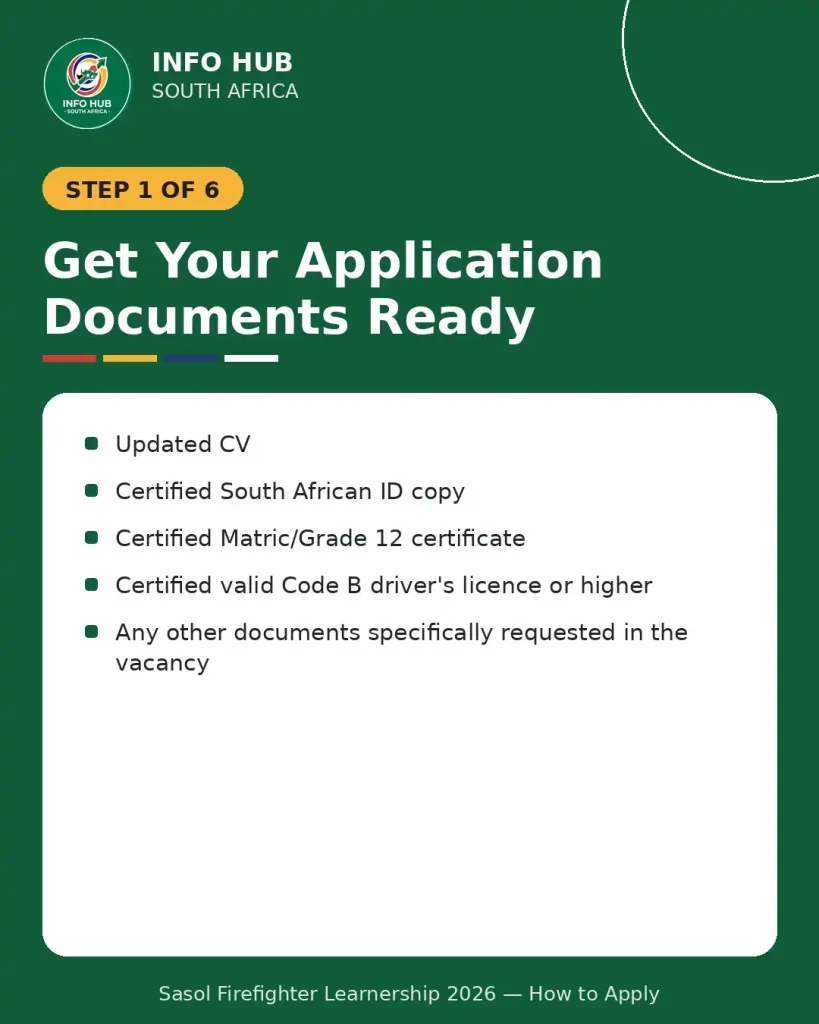
Start by creating a clean digital folder containing the documents required for the opportunity. Having everything prepared before you begin makes the online application much easier.
Your preparation checklist should include:
Your CV should be easy to read and should clearly show your education, relevant experience, contact details and skills. Avoid adding information that you cannot prove.
Make Your CV Relevant
Applicants do not need to turn a CV into a long essay. A focused CV is generally easier for a recruiter to review.
For a Sasol Firefighter Learnership, relevant information may include appropriate educational achievements, driver’s licence details, practical experience, volunteering, safety-related exposure and other activities that demonstrate responsibility or teamwork.
Do not claim professional firefighting experience if you do not have it. The purpose of a learnership is to provide structured development, so accuracy is more valuable than exaggeration.
Step 2: Verify the Vacancy
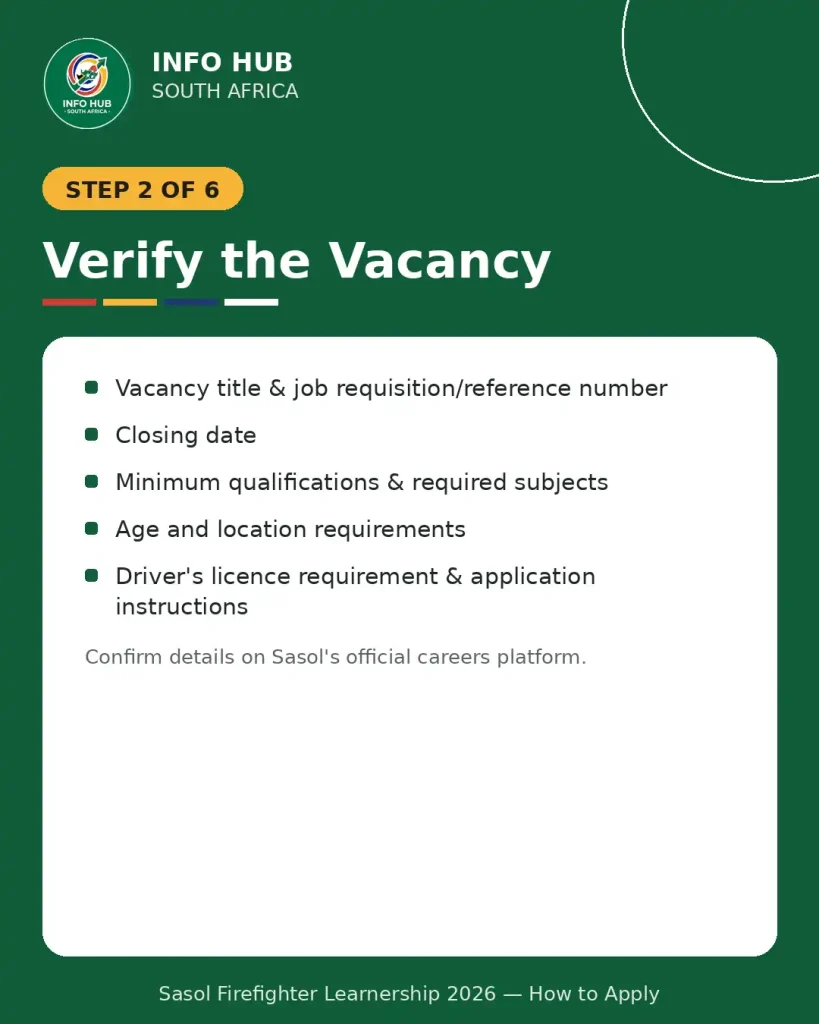
Before entering personal information, check that the opportunity is still active and that you are looking at the correct vacancy.
Pay attention to:
Sasol’s careers FAQ explains that candidates need to register on the careers website and apply for the particular position they are interested in.
Step 3: Create or Access Your Recruitment Profile
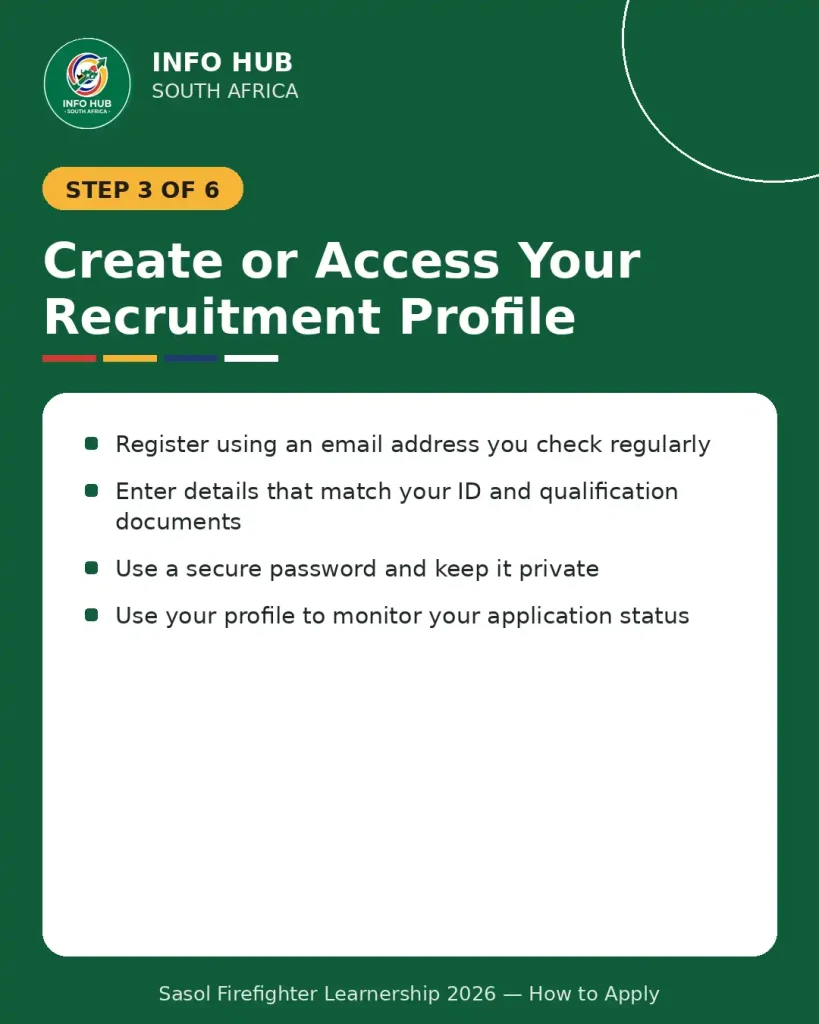
If the recruitment platform requires an account, register using an email address that you regularly check.
Enter your details carefully. Your name should correspond with your official identification and qualification documents.
When creating a password, use a secure password that you do not share with other people. Keep your login information private.
A recruitment account may also allow you to monitor applications and manage information associated with your candidate profile.
Step 4: Complete the Online Application
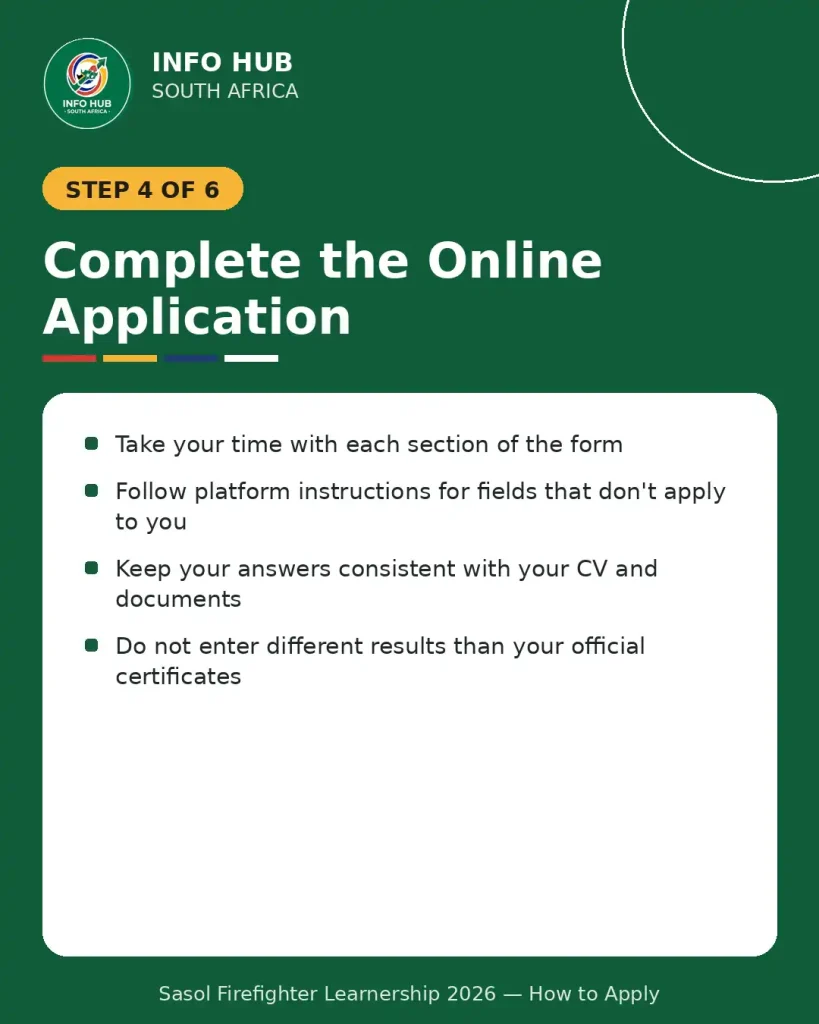
The application form may request personal, educational and employment information.
Take your time with each section. If the form asks for information that does not apply to you, follow the instructions provided by the platform rather than entering random information simply to complete a field.
Your answers should remain consistent with your CV and supporting documents.
For example, if your Matric certificate shows a particular qualification or subject combination, do not enter a different result on the online form. Information can be checked later during the verification stage.
Step 5: Upload the Required Documents
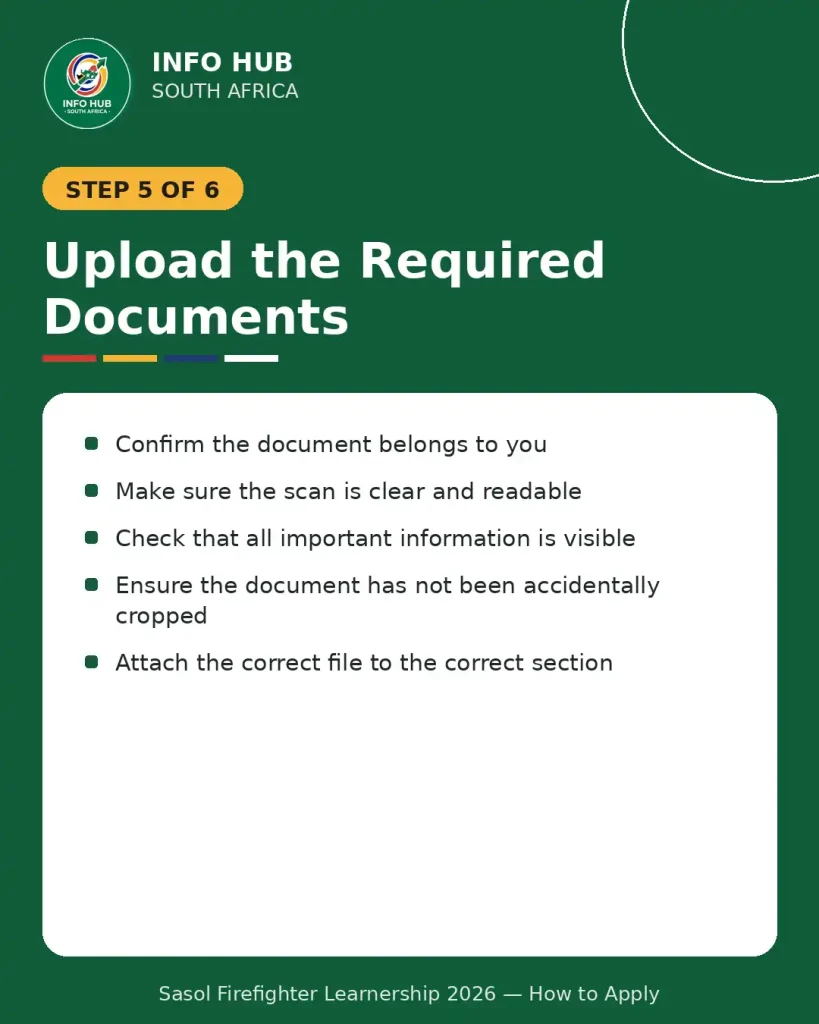
Upload each document in the format requested by the recruitment system.
Before attaching a file, check that:
- The document belongs to you.
- The scan is readable.
- All important information is visible.
- The document has not been accidentally cropped.
- The correct file has been attached to the correct section.
A blurry certificate or incomplete ID copy can make verification more difficult.
Step 6: Review Everything Before Submission
Do not immediately press the submit button after uploading your documents.
Spend a few minutes checking your application from beginning to end.
Final Application Checklist
Once you are satisfied that everything is accurate, submit the application according to the instructions on the official recruitment platform.
What Happens After the Application?
Many applicants assume that submission means the next step will automatically be an interview. That is not how the recruitment process works.
Sasol explains that applications are reviewed against the requirements and that only shortlisted candidates progress to the interview stage. Candidates who successfully complete the interview process may then proceed to further assessment and verification.
For a firefighter opportunity, this is particularly important because candidates may need to demonstrate suitability for demanding emergency-response conditions.
Stage 1: Application Screening
The first stage involves reviewing applications against the requirements of the opportunity.
Recruiters may consider whether the candidate meets the basic educational, citizenship, age and other stated requirements.
This is why applicants should not apply with incomplete or inaccurate information. If an applicant clearly fails a mandatory requirement, the application may not progress.
Stage 2: Shortlisting
Applicants who appear to meet the requirements can be placed on a shortlist.
Being shortlisted does not mean that you have been selected for the learnership. It means you have progressed to another stage of consideration.
Keep your phone and email available during this period so that you do not miss legitimate recruitment communication.
Stage 3: Interview
Shortlisted applicants may be invited to an interview.
Prepare by understanding what the programme involves and thinking about situations that demonstrate qualities such as:
You do not need to memorise complicated answers. Give honest responses and explain your experiences clearly.
Stage 4: Psychometric or Aptitude Assessment
Sasol’s learner recruitment process can include psychometric assessment following successful interviews.
These assessments can examine areas such as reasoning, behavioural preferences and other characteristics relevant to the recruitment process.
The best preparation is to understand the instructions, read questions carefully and answer honestly.
Stage 5: Medical and Physical Evaluation
For a firefighter role, physical and medical suitability can be particularly significant.
The information supplied for this opportunity refers to specialised firefighter fitness and medical assessments, as well as stress and fear assessments involving challenging environments.
Candidates should therefore understand that firefighting is not simply an office-based career. Emergency personnel may work in physically demanding situations where strength, stamina, coordination and emotional control matter.
Stage 6: Verification and Security Checks
Candidates who progress through the selection process may undergo additional checks.
Sasol’s published recruitment information refers to qualification verification, security clearance and medical fitness requirements within its learner recruitment process.
This is another reason to provide truthful information from the beginning.
How to Prepare for a Firefighter Assessment
Getting ready should begin before you receive an invitation. You cannot know exactly which assessment you will receive unless the employer provides those details, but you can prepare yourself generally.
Improve Your Physical Readiness
Firefighting can demand endurance and physical effort. A sensible preparation routine can include general cardiovascular fitness, mobility and strength work appropriate to your current ability.
Do not attempt extreme training immediately before an assessment. Gradual preparation is safer and more sustainable.
Prepare for Challenging Environments
The supplied programme information specifically mentions heights, confined spaces, fire exposure and cat ladders as part of the stress and fear assessment.
If you know that these environments make you uncomfortable, recognise this before applying. Firefighting requires people to operate safely while following procedures in difficult conditions.
Understand Safety First
A firefighter does not simply run towards danger. Professional emergency response relies heavily on procedures, communication, equipment, teamwork and risk control.
During interviews, showing that you understand the importance of following safety instructions can be more useful than trying to sound heroic.
Common Application Mistakes to Avoid
Even qualified applicants can weaken their chances through avoidable mistakes.
Applying Without Checking Requirements
Do not submit an application simply because the word “learnership” appears in the vacancy title. Read the full requirements first.
The firefighter learnership may require particular subjects, a driver’s licence, citizenship, age eligibility and physical or medical suitability.
Using an Outdated CV
Your CV should contain your current contact information and education details. Remove obvious errors and make sure the document is professionally presented.
Uploading Poor-Quality Documents
Recruitment teams need to be able to read your documents. Check every scan before submission.
Providing False Information
Never change marks, qualifications, dates or experience to appear more competitive.
Sasol’s published learner information warns that candidates providing untruthful information or invalid documents may be rejected.
Missing the Closing Date
Do not wait until the final few hours if you can apply earlier.
Technical problems, slow internet connections or missing documents can turn a straightforward application into a missed opportunity.
Quick Facts About the Firefighter Learnership
| Detail | Information |
|---|---|
| Programme | Sasol Firefighter Learnership |
| Target group | Unemployed South African youth |
| Advertised age range | 18–29 years |
| Minimum education | Grade 12 / National Senior Certificate or equivalent |
| Driving requirement | Code B driver’s licence or higher |
| Main career area | Industrial firefighting and emergency response |
| Selection | Screening, shortlisting, interviews and further assessments |
| Physical assessment | May include firefighter fitness and medical evaluation |
| Stress assessment | May involve heights, confined spaces, fire exposure and cat ladders |
| Application fee | Applicants should not pay recruitment fees |
The exact requirements can vary between vacancies, so applicants should always read the current advert before applying.
What to Do After Submitting Your Application
After submission, keep a record of the application where possible. Save confirmation messages, vacancy information and any reference number provided by the recruitment system.
Continue checking the email address and contact details used during registration. If Sasol contacts you for a legitimate next step, respond according to the instructions provided.
At the same time, continue looking for other verified opportunities. Do not stop your job search simply because you have submitted one learnership application.
If You Are Not Selected
Not being selected does not mean that you cannot build a career in safety, emergency response or another technical field.
Review your CV, improve areas where you are lacking and continue looking at legitimate learnerships, internships, training programmes and entry-level vacancies.
Future opportunities may have different requirements, so keeping your documents current is worthwhile.
Final Checklist Before You Apply
Before submitting a firefighter learnership application, run through this checklist one final time:
FAQs
Conclusion
The best way to approach the Sasol Firefighter Learnership is to treat it as a professional recruitment process rather than simply another online application. Check the requirements carefully, prepare your documents early and make sure every detail in your CV and application can be supported by genuine information.
Physical preparation is also worth taking seriously. The firefighter role can involve demanding conditions, so candidates should understand the expectations before entering the assessment process.
Most importantly, use official sources to verify vacancies. Third-party websites can help people discover opportunities, but the employer’s recruitment platform should be the final reference for current vacancies, requirements and application instructions.
For unemployed South African youth interested in emergency response and industrial safety, the firefighter learnership can be a worthwhile opportunity to investigate when an eligible vacancy is open. Apply carefully, stay alert for scams and continue developing your skills regardless of the outcome of one application.
About Info Hub South Africa
Info Hub South Africa is an informational platform created to help South African students, job seekers and members of the public find useful information about university portals, student services, government information, learnerships, careers and other opportunities. Our goal is to make important information easier to understand by providing practical guides, application instructions and helpful resources in one place.
When reading articles on Info Hub South Africa, visitors should always verify important requirements, deadlines and application details through the relevant official university, government department or employer website before submitting an application. This helps readers make informed decisions and avoid outdated information or fraudulent opportunities.
For future firefighter learnerships, career opportunities and other useful South African information, Info Hub South Africa aims to remain a helpful starting point for discovering and understanding opportunities while encouraging readers to rely on official sources for final verification.
Read More
Majuba Student Portal South Africa 2026: Student Login, Registration & Complete Portal Guide
Matric Results 2026 Online Check South Africa: Get Your NSC Results Instantly
CUT Status Check South Africa 2026: Complete Application and Admission Guide
Learners Licence Booking South Africa 2026: Requirements, Steps & Fees