COIDA South Africa 2026: Registration, Claims, Status Check & Trusted Guide
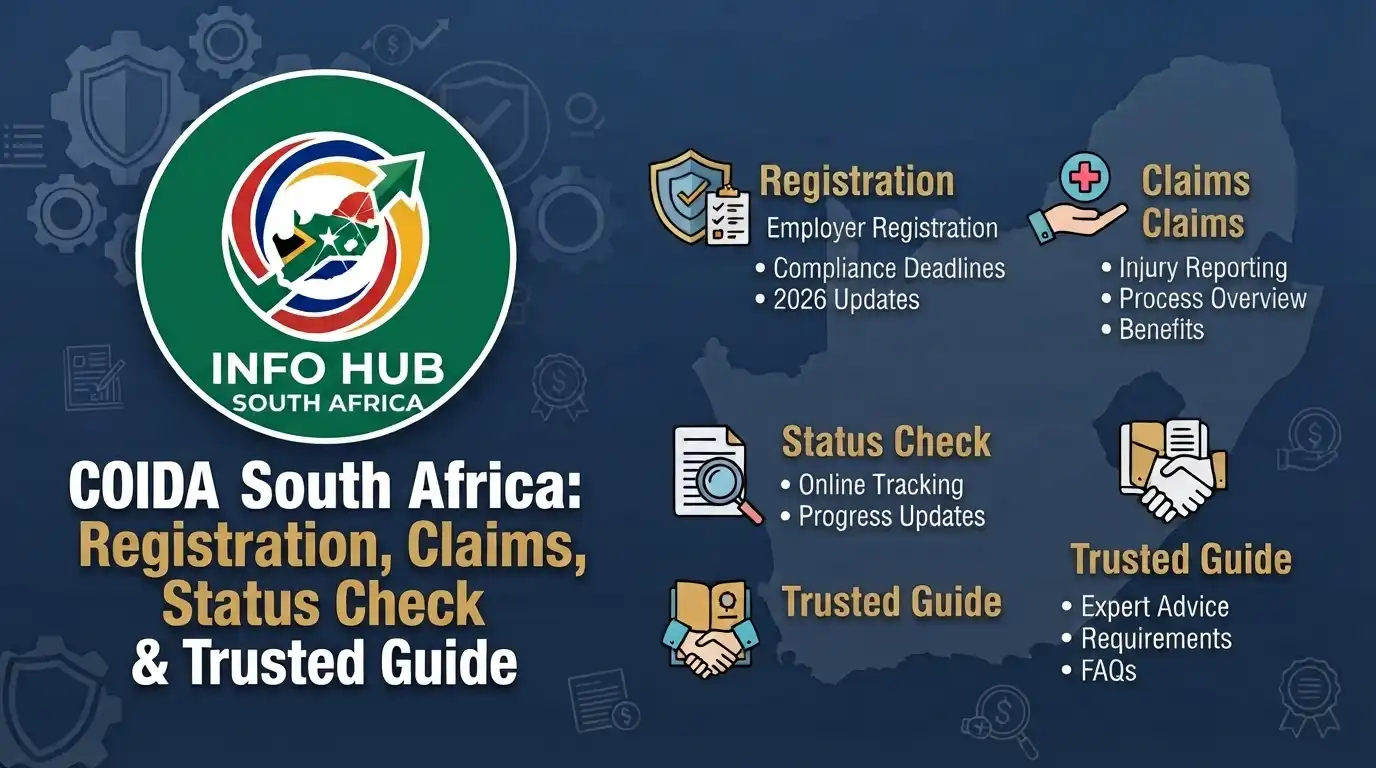
Workplace injuries can happen at any time, and COIDA (Compensation for Occupational Injuries and Diseases Act) helps protect employees and employers. It provides compensation for work-related injuries, medical expenses, and lost income while an employee recovers.
For employers, Compensation for Occupational Injuries and Diseases Act registration is required and helps ensure claims are handled through the proper process.
It is also important to understand the difference between COIDA and UIF. Compensation for Occupational Injuries and Diseases Act covers workplace injuries and occupational diseases, while UIF provides benefits such as unemployment and maternity support. If you are looking for a UIF login or UIF online application, you will need to use the separate UIF system.
What Is COIDA?
The Compensation for Occupational Injuries and Diseases Act (COIDA) is South African legislation that steps in when someone gets hurt or falls ill because of their job. Think of it as a financial cushion — one that stops a single workplace accident from turning into a personal crisis for the worker or a legal nightmare for the business.
The law does two things at once:
- Looks after employees. It covers medical bills, pays out for temporary or permanent disability, and provides death benefits to a worker’s family if the worst happens.
- Protects employers. Instead of facing a direct lawsuit, a compliant employer’s claims get handled through a government-managed fund — which is exactly why it matters to register for Compensation for Occupational Injuries and Diseases Act early rather than waiting until an incident forces the issue.
The Act touches nearly every industry, from construction sites to manufacturing floors to ordinary office jobs. One change worth noting: domestic workers in private households are now covered too, a shift introduced through recent Compensation for Occupational Injuries and Diseases Act amendments south africa has made to widen the safety net. For employers and employees alike, the framework takes some of the financial risk out of the workplace, so both sides can focus on getting the job done safely.
Key Benefits of COIDA
COIDA exists to make sure nobody is left to cope alone when things go wrong at work. Here’s what it actually delivers, split by who it’s protecting.
For Employees
Compensation when work causes harm. If an employee gets injured or develops an illness because of their job, Compensation for Occupational Injuries and Diseases Act covers the fallout financially. That includes:
Medical care that doesn’t stop at the hospital door. Beyond the payout, Compensation for Occupational Injuries and Diseases Act arranges for the actual treatment employees need — hospital stays, surgery, and the rehabilitation that follows, so people have a real path back to work rather than being left to manage recovery alone.
For workers, this isn’t just a policy on paper. It’s a guarantee that if the job hurts them, someone’s got their back.
For Employers
Protection from personal lawsuits. This is arguably the biggest reason employers can’t afford to skip registering for Compensation for Occupational Injuries and Diseases Act. Once a business is registered and compliant, claims go through the Compensation Fund instead of the courts — meaning an injured employee can’t sue the company directly, as long as the employer has held up their end of the Act.
A shared-risk system, not a personal expense. Employers pay into the Compensation Fund based on payroll size and how risky their industry is. It works much like insurance: contributions get pooled, and that pool absorbs the cost when claims come in. So instead of one bad accident wiping out a company’s finances, the fund carries that weight collectively.
Put simply, Compensation for Occupational Injuries and Diseases Act lets employers run a safer workplace without constantly bracing for the financial hit a single accident could cause.
Who Does COIDA Actually Cover?
Not everyone who works falls under Compensation for Occupational Injuries and Diseases Act, so it’s worth knowing where the line sits before assuming coverage applies.
Who’s Included
If someone works under a contract of service, they’re generally covered — full-time, part-time, or temporary makes no difference. That covers:
Who’s Left Out
A few categories fall outside Compensation for Occupational Injuries and Diseases Act scope:
Knowing exactly who qualifies matters on both sides. Employees get clarity on what protection they can expect, and employers know exactly who they need to register for Compensation for Occupational Injuries and Diseases Act — which, in most cases, means everyone on the payroll except the exclusions listed above.
How COIDA Actually Works
Strip away the jargon and Compensation for Occupational Injuries and Diseases Act runs on a simple yearly cycle. Here’s how the pieces fit together.
1. You Register
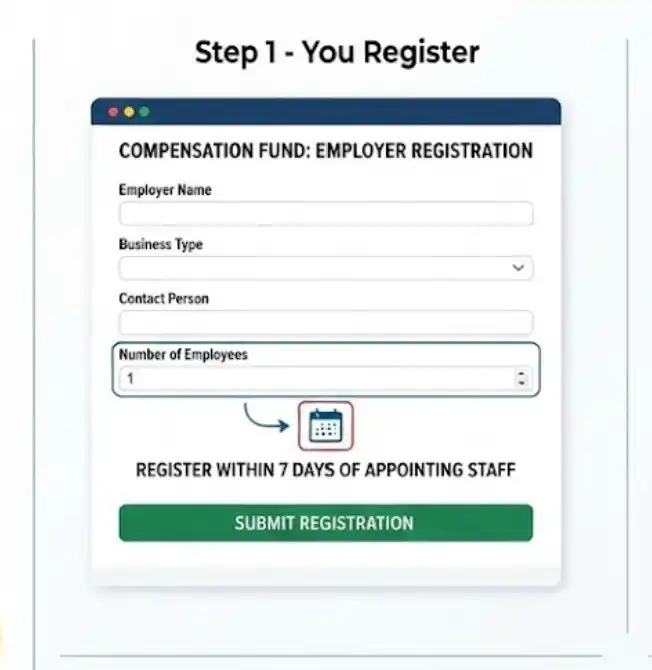
The moment you take on even one employee, the clock starts. The Department of Employment and Labour requires that you register for Compensation for Occupational Injuries and Diseases Act with the Compensation Fund within 7 days of appointing staff — this is the step people mean when they talk about “COID registration.”
2. You Get a Registration Number

Once registration goes through, you’re issued a contract account number (often called a CF registration number). According to the Labour site, these typically start with “99.” That number is your proof of registration and gets used every time you deal with the Fund going forward.
3. You Submit ROE and Pay Annually
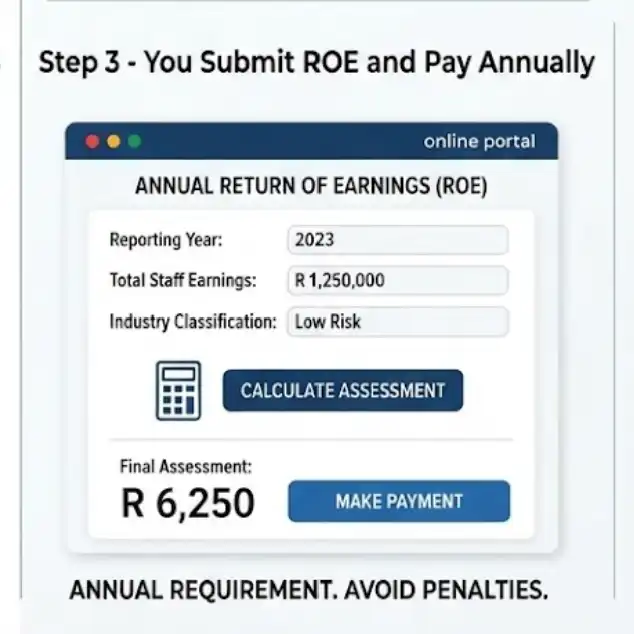
Each year, registered employers submit a Return of Earnings (ROE) and pay an assessment based on staff earnings and how risky their industry is classified. This is where most of the Fund’s revenue actually comes from. Miss the submission window and you’re looking at interest or penalties — so this isn’t a step to let slip.
4. Claims Get Processed When Incidents Happen
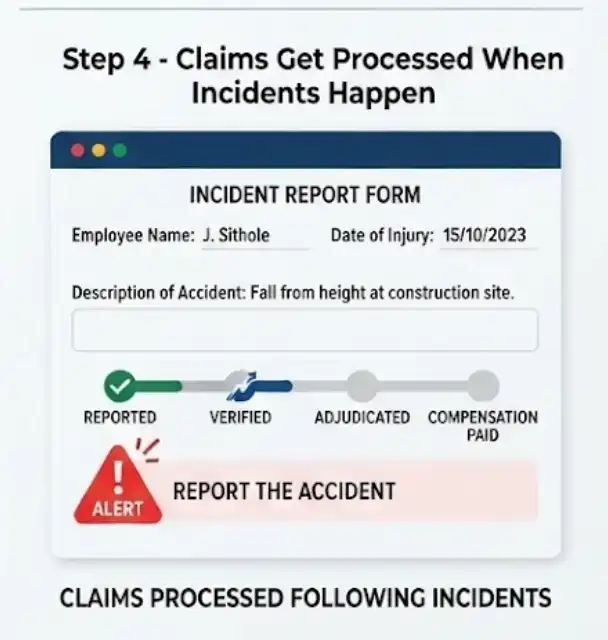
If someone’s hurt on the job, the employer reports the accident and submits supporting details, sometimes through online systems. From there, the employee — or their dependants, if it’s a fatal case — can claim compensation under the Act.
No one needs to memorise every form. The whole system just depends on employers reporting accurately and on time.
Common Workplace Injuries — And Why COIDA Matters
Workplace injuries happen far more often than most people realise. The International Labour Organization estimates that over 2.3 million people die each year worldwide due to work-related accidents and occupational diseases. South Africa sees thousands of injuries reported annually across every major industry, which is exactly why a system like Compensation for Occupational Injuries and Diseases Act needs to exist.
Some injuries show up more than others:
- Slips, trips, and falls — common wherever people move around fast, from office floors to construction sites.
- Musculoskeletal injuries — the result of heavy lifting or repetitive strain, especially in physical roles.
- Machinery accidents — a persistent risk in manufacturing and industrial settings.
- Exposure to harmful substances — particularly serious in mining and chemical work.
- Vehicle-related incidents — a frequent hazard in logistics and transport.
Whatever form the injury takes, Compensation for Occupational Injuries and Diseases Act‘s role stays the same: making sure the employee gets proper support and the incident doesn’t spiral into a financial disaster for either side.
How Employers Stay Compliant
Compliance under COIDA isn’t a one-time task — it’s a handful of habits that need to run continuously.
- Register with the Compensation Fund. Every employer needs to register for Compensation for Occupational Injuries and Diseases Act and submit annual returns reflecting employee wages — this is the foundation everything else builds on.
- Stay current on payments. Coverage only holds if contributions to the Compensation Fund are paid regularly, not just at registration.
- Keep proper records. Incident logs, risk assessments, and employee health documentation all matter when a claim needs backing up.
- Prioritise prevention. Safety training and clear protocols reduce how often Compensation for Occupational Injuries and Diseases Act even needs to be used in the first place — which benefits everyone.
- Report injuries without delay. Waiting too long to report an incident is one of the most common reasons claims get rejected or stall in processing.
Get these right, and compliance stops feeling like a burden and starts running quietly in the background.
FAQs
Conclusion
COIDA isn’t just red tape — it’s what keeps South African workplaces functioning fairly when things go wrong. Employees get real financial protection if they’re hurt on the job, and employers avoid the kind of lawsuit that could otherwise threaten the business. Get compliance right, and both sides come out ahead.
None of that happens by accident, though. It takes employers actually prioritising safety, staying on top of registration, and treating COIDA as part of how the business runs — not an afterthought. Whether you’re an employee trying to understand what you’re entitled to, or an employer trying to stay compliant, Compensation for Occupational Injuries and Diseases Act sits at the centre of a fair, functioning workplace.
For guidance on registration, claims, or ongoing compliance, Sena Financial Services can walk you through the process and keep your business on the right side of the law. And if you’re after broader guidance on South African workplace regulations, UIF, and related compliance topics, Info Hub South Africa is a solid resource to bookmark — it’s built to help both employees and employers make sense of exactly this kind of thing.
Read More
Matric Results 2026 Online Check South Africa: Get Your NSC Results Instantly
SASSA Reapplication South Africa: How to Reapply for the SRD Grant in 2026
UI-19 Form South Africa: Download, Complete & Submit Guide (2026)